

SOFT LIFE OR SMART LIVING?
There is a particular kind of Nigerian suffering that comes with a motivational speech.
You could be sitting quietly, calculating how ₦10,000 will survive until the end of the week, when someone will look at you and say:
“You young people of today don’t want to suffer.”
Suddenly, you are no longer broke. You are simply lacking character development.
Your parents trekked. They worked multiple jobs. They survived with very little.They built businesses without Instagram. They communicated without WhatsApp. And somehow, every difficult experience has become evidence that you too must struggle before you deserve comfort.
But now Nigerian Gen Z came along and asked a surprisingly dangerous question:
“What if success doesn’t have to hurt this much?”
That question sits at the heart of the growing soft-life movement.
At first glance, soft life looks like luxury apartments, vacations, brunches, skincare routines, nice clothes and aesthetically pleasing “day in my life” videos. But underneath the aesthetics is something much bigger -A generation reconsidering its relationship with work, money, time, ambition and rest, and perhaps what we call soft life is actually something more practical -smart living.
Nigeria has always had a hustle culture. It is practically woven into the national fabric; The roadside trader hustles. The hawker hustle. The student hustles. The civil servant hustles. The entrepreneur hustles. The graduate hustles. The person with a full-time job and three side businesses is somehow still looking for another side hustle. There is even a Nigerian joke that if you ask someone what they do for a living, they will give you a list long enough to qualify as a CV and behind the humour is a serious reality.
Nigeria’s labour market has long been characterised by a large informal sector and high level of self-employment. The National Bureau of Statistics reported that about 92.7% of employed people were in informal employment in Q1 2024, while only 16% of workers were in wage employment. This matters because for millions of Nigerians, “hustle” is not just a motivational slogan. It is survival. The young woman selling clothes online may not be doing it because entrepreneurship is trendy. She may be paying school fees.
The university graduate learning graphic design at midnight may not be chasing a “side hustle aesthetic.” They may be trying to create an alternative to waiting endlessly for a formal job. The young man driving passengers for hours after school may simply be trying to increase his income. So when Gen Z begins questioning hustle culture, the conversation cannot simply be dismissed as laziness.
There is a generation trying to figure out how to survive without permanently living in survival mode.
“I WANT SOFT LIFE” BUT WHAT DOES THAT ACTUALLY MEAN? “I WANT TO RELAX AND BE TAKEN CARE OFF” but what does that actually mean?

Ask a Nigerian young person what soft life means and you might get an answer involving money, holidays, good food and a functioning air conditioner. Fair enough.
After sweating through a power outage, discovering that your data has disappeared mysteriously and watching your transport fare increase again, air conditioning starts looking less like luxury and more like a human right, but soft life is not necessarily about extravagance.
For many young people, it is about choice. The choice to leave an unhealthy workplace. The choice to rest without feeling guilty. The choice to spend time with family. The choice to have savings. The choice to work remotely, virtually or hybrid. The choice to pursue a career that offers flexibility. The choice to say, “I cannot do this today,” without feeling like the entire Nigerian economy will collapse or your village society will hold chief-rite meetings on your head.
That distinction is important, because there is a difference between wanting an easy life and wanting a sustainable life. In the end, we are all hustling for something sustainable.
The first can become entitlement.
The second can become wisdom.
What are the numbers behind the hustle?
The desire for a different kind of working life is happening against a difficult economic backdrop. The NBS reported that Nigeria’s overall unemployment rate was 5.3% in Q1 2024, while unemployment among people aged 15–24 was 8.4%. The same report recorded a youth NEET rate the share of young people neither in employment, education nor training—of 14.4%. These figures need context because unemployment statistics do not capture every form of economic difficulty. A person may technically be employed while earning too little, working fewer hours than they want, or surviving through unstable informal work.
That is why the conversation about young Nigerians and work cannot simply be reduced to:
“There are jobs, young people should work.”
The bigger question is:
What kind of work allows young people to build stable, sustainable, dignified lives?
That question is increasingly important.
The World Bank’s 2026 State of the Nigerian Youth report examines youth employment, education and skills, financial and digital inclusion, health and well-being, and civic engagement showing just how interconnected these issues are.
And in 2026, the International Labour Organization has also highlighted the need to equip young Nigerians with future-ready skills, decent work and opportunities in Nigeria’s growing digital and green economies. In other words, the future of work is not simply about getting young people to work harder. It is also about helping them become more skilled, adaptable and economically empowered.
From Work-Hard to Work-Smart
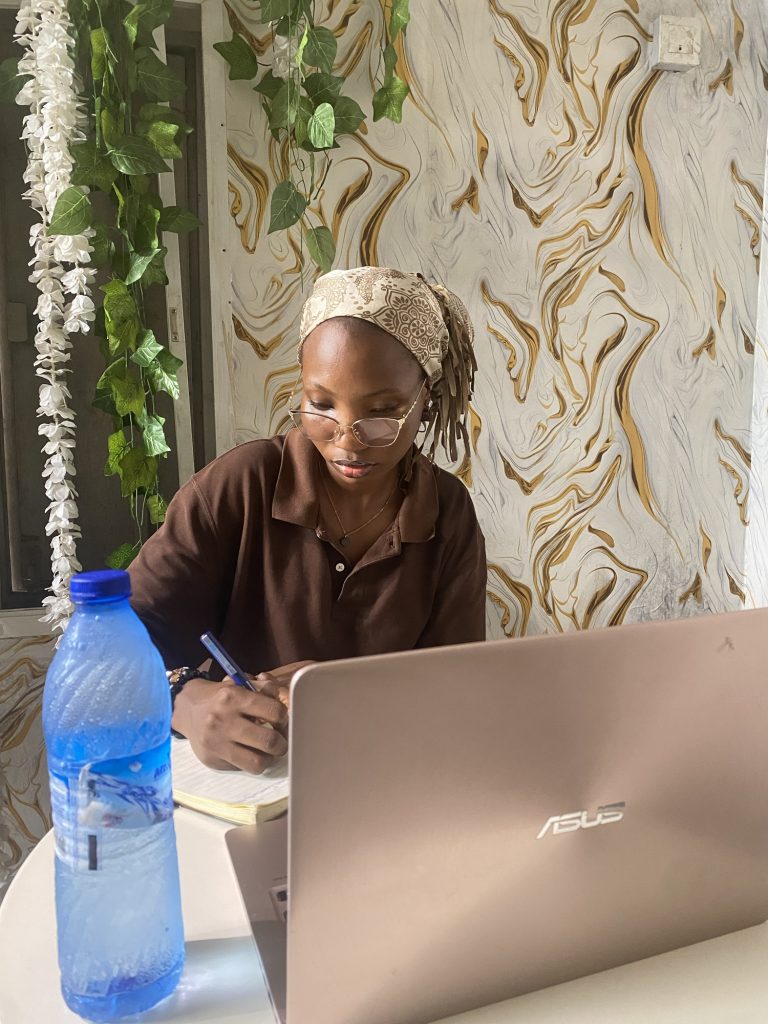
Perhaps the biggest Gen Z contribution to hustle culture is not the rejection of hard work. It is the rejection of hard work without strategy. Previous generations often had fewer options. If you got a stable job, you held on to it. Today, technology has expanded the possibilities. A young Nigerian can learn coding online, build a design portfolio, sell products through social media, offer writing services, learndigital marketing, create educational content, Work with clients outside Nigeria, build a personal brand, Run a small business from a phone. Saying bye to uncomfortable or non-rewarding work environments.
The possibilities are not equally accessible to everyone, of course. Internet access, electricity, devices, education, location and financial resources still create significant barriers. But the definition of work has undeniably expanded, your office can now be your bedroom, your marketing department can be Instagram. Your customer-service department can be WhatsApp. Your accountant can be a spreadsheet, and your boss can occasionally be you arguing with yourself about why you haven’t finished the task you gave yourself. That flexibility is powerful. But it comes with a warning.
Some Soft-Life Challenges
Social media has created something fascinating, it has made luxury look ordinary, You open TikTok and someone is having breakfast in Paris. You open Instagram and someone is showing their “simple morning routine” from an apartment that costs more than your entire extended family’s yearly rent.
Then you check your bank account.
₦4,850.
And suddenly you are questioning your purpose. But social media is not a financial statement. The soft life displayed online is often highly curated.
We see the holiday, not the credit-card bill.
We see the designer bag, not the payment plan.
We see the beautiful apartment, not the years of work behind it or whether the person can afford it.
This is where the soft-life movement can become dangerous.
If young people begin believing that success means looking rich, they may end up spending money to create the appearance of wealth. That is not financial freedom, that is financial pressure wearing perfume.
Real smart living requires understanding money.
Budgeting. Saving. Learning valuable skills. Avoiding unnecessary debt. Building emergency funds when possible. Understanding investments before putting money into them. And knowing the difference between something you genuinely need and something the algorithm convinced you would make your life better.
The Soft-Life Mindset
For generations, exhaustion has often been treated as proof of seriousness.
“I slept for three hours.”
“Wow, you are really hardworking.”
But what if the goal isn’t to become the person who can survive on three hours of sleep?
What if the goal is to build a life where you don’t have to? Rest is not the opposite of ambition. Sometimes, rest protects ambition, A tired person can make poor decisions. A constantly stressed person may lose creativity.
Someone who never takes breaks can eventually resent the very dream they once loved. This does not mean every difficult day is a sign that you should quit. Some seasons require sacrifice.
Some goals require discipline.
Some opportunities require long hours.
But there is a difference between temporary sacrifice and making suffering your permanent lifestyle.
Gen Z is increasingly asking that distinction.
Another major shift is the growing popularity of conversations around boundaries.
“Protect your peace.”
“Don’t explain yourself too much.”
“Learn to say no.”
“Stop people-pleasing.”
Some of these phrases have become so common that Nigerian social media could probably run a national election using only relationship advice captions, but underneath the jokes is something valuable, young people are increasingly recognising that time and emotional energy are resources, not every argument requires your participation, not every opportunity deserves a yes.
Not every workplace deserves unlimited access to your personal life.
Not every friendship needs to be maintained forever.
And not every family expectation must automatically become your life plan.
Boundaries do not mean disrespect.
They can mean recognising that your life belongs to you.
BUT LET’S NOT ROMANTICISE LAZINESS
Here is where the conversation needs balance, rejecting hustle culture does not mean rejecting discipline. You cannot wake up at noon every day, avoid learning anything useful, spend money you do not have and call it soft life.
That is not smart living.
That is simply poor planning with a cute name, there are things Gen Z still has to learn from previous generations, persistence matters, Discipline matters, Patience matters, Showing up matters. Keeping your word matters, learning to do difficult things matters.
The solution is not to replace “hustle until you collapse” with “manifest until someone pays your bills.”
Neither extreme work, the better question is:
How do we work hard without destroying ourselves?
Smart Living: The new definition of success.
For a long time, success was easy to recognise.
A big house. A nice car. A prestigious job. Marriage. Children.
A respectable title.
Today, young people are adding different elements.
Do I have peace?
Can I support myself?
Do I have useful skills?
Can I make decisions for myself?
Do I have people I love around me?
Can I take care of my mental and physical well-being?
Do I actually like the life I am building?
Am I impacting my world positively?
These questions do not make money irrelevant.
Far from it, Bills remain bills, Rent remains rent, Data still disappears at the worst possible moment, and Nigerian landlords have not yet accepted “protecting my peace” as a valid payment method.
Money matters, Career matters, Achievement matters But they are increasingly being seen as tools for building a life, rather than the entire definition of life itself.
SMART LIVING IS NOT THE ABSENCE OF HUSTLE
Maybe the argument has never really been soft life versus hustle.
Maybe it is mindless hustle versus intentional ambition.
Smart living means knowing when to push and when to pause.
It means developing skills instead of only chasing jobs. I should put that in cap lock.
IT MEANS DEVELOPING SKILLS INSTEAD OF ONLY CHASING JOBS.
It means understanding money instead of only chasing income.
It means creating opportunities instead of waiting for one perfect opportunity.
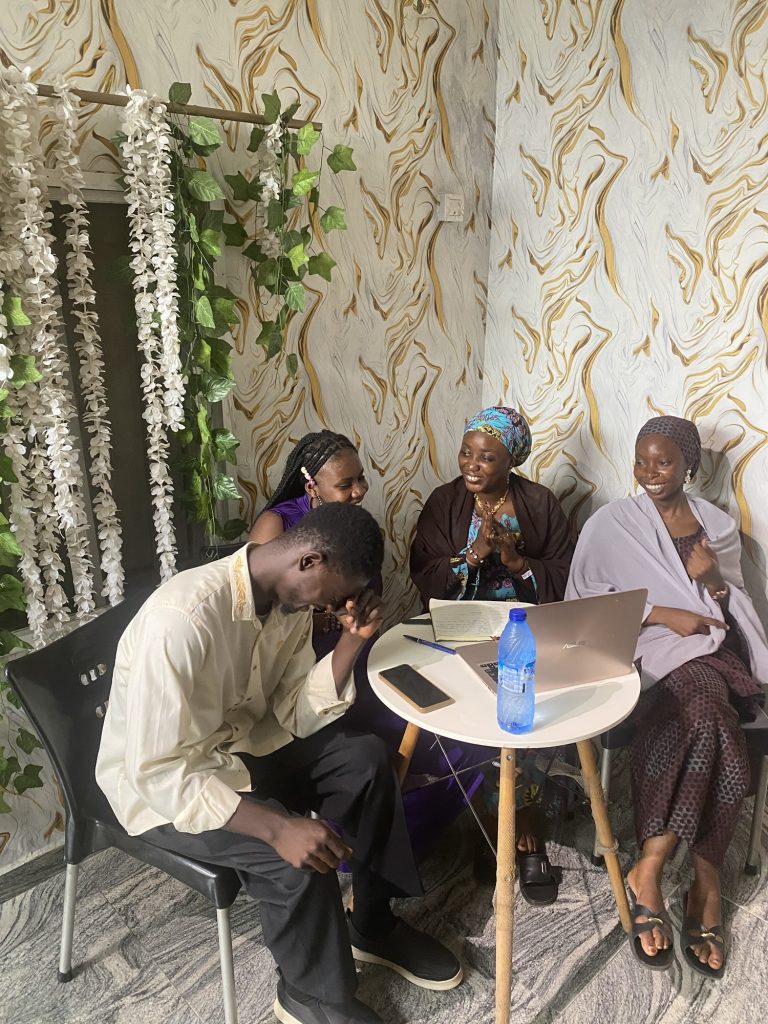
It means collaborations, building relationships and networks.
It means learning from failure without turning failure into an identity.
It means taking care of your body before it forces you to.
It means understanding that your twenties are not a race against everyone else’s timeline.
And perhaps most importantly, it means refusing to measure your worth by your productivity.
You are a human being. Not a machine, Even machines need maintenance.
SOFT LIFE WITH A SPREADSHEET
Maybe the funniest and most Nigerian way to describe this new philosophy is -Soft life with a spreadsheet. How can we attain soft life with smart living?
1. Enjoy yourself but know your budget, build your career but know your limits.
2. Start a business but understand your numbers.
3. Travel when you can afford it.
4. Rest when you need it.
5. Save when you can, invest only after learning what you’re investing in.
6. Work hard.
7. Work smart.
8. And occasionally close the laptop before it becomes your closest relationship.
SO, SOFT LIFE OR SMART LIVING?
Maybe we should stop treating the two as opposites because working softly is now the new deal. If by now you understand the knowledge of this article, instead of saying “hardworking” -many will call you “softworking”. See how that feels? I think we should find a way to get that as a word in a dictionary.
Soft life, at its healthiest, is not about avoiding effort, Smart living is not about avoiding ambition, the real goal is sustainable success, a life where you can work without worshipping work.
Earn without constantly chasing, spend without pretending, rest without guilt, dream without comparison and succeed without losing yourself along the way. Because perhaps the greatest rebellion against hustle culture is not refusing to work, it is refusing to believe that suffering is the only evidence that you are trying.
Our parents and grandparents worked incredibly hard to give future generations opportunities they did not have. Maybe our responsibility is not to copy every part of their struggle. Maybe it is to use those opportunities wisely.
To learn.
To build.
To adapt.
To create.
To rest.
And, yes, to hustle when necessary but with a destination in mind, because there is no prize for being the most exhausted person in the room, and there is certainly no award for looking successful while secretly drowning in debt.
The real flex is different.
The real flex is having options.
The real flex is having skills.
The real flex is financial wisdom.
The real flex is peace.
The real flex is being able to look at the life you are building and genuinely say:
“This life is mine and I actually want to live it.”
Perhaps Nigerian Gen Z is not killing the hustle.
Perhaps they are simply giving it a new instruction:
Work hard. Think harder. Live wisely.
And when the work is done?
Go home. Eat good food. Rest.
Tomorrow, we hustle again but this time, smarter.
WRITER: Salmah M. Saidu & Goodness Felix-Adebayo
Editor: Goodness Felix- Adebayo